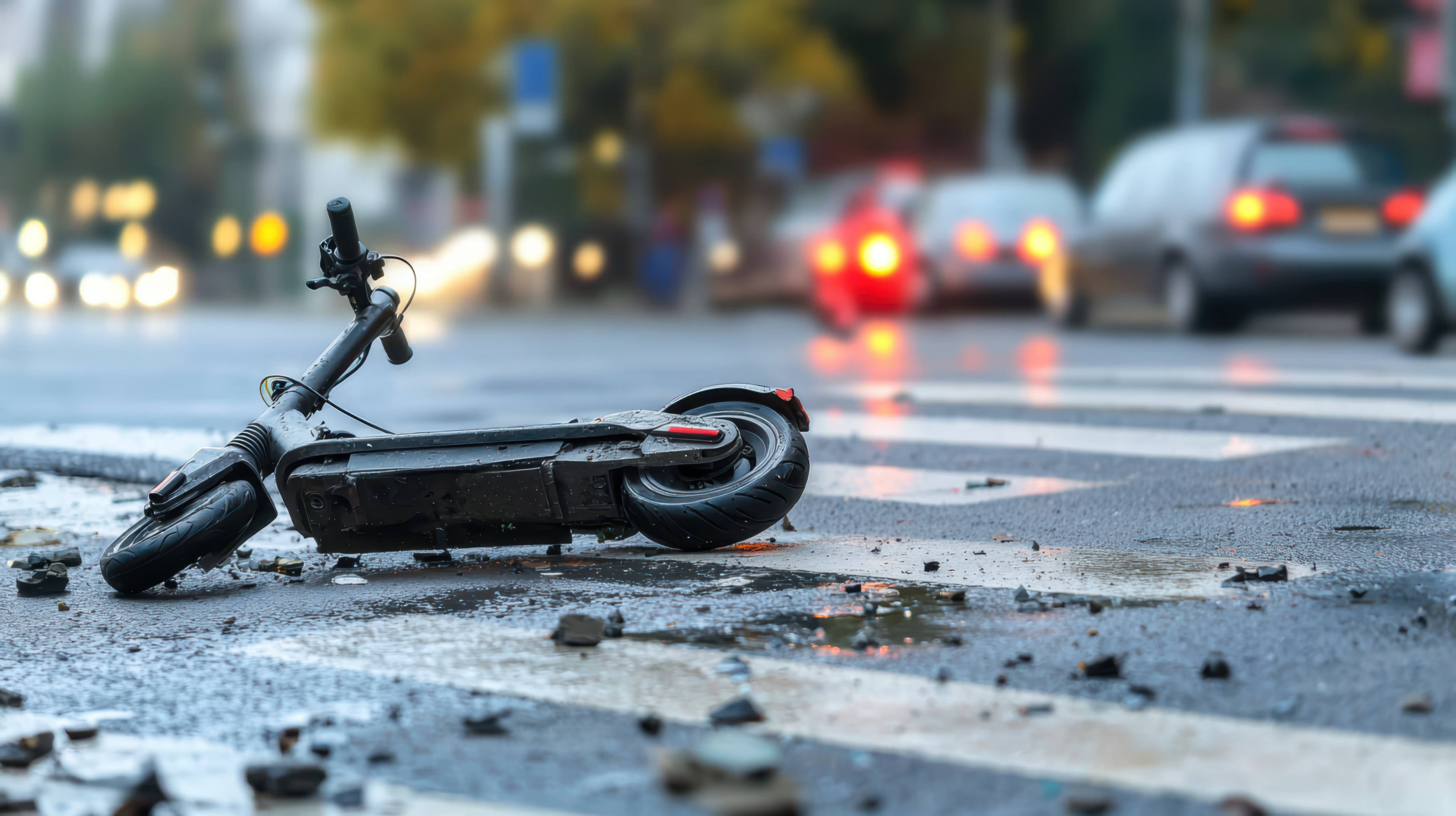
Electric Scooter Accident Lawyers
Whether you were riding a rented scooter, walking on a sidewalk, or driving a car when a scooter rider crossed your path, you may be dealing with medical bills and a claim that involves more than one party. Ali Law Group reviews your case for free and explains your options.
Injured in an Electric Scooter Accident?
Electric scooter crashes tend to have more than one possible cause.
A driver may have turned across the rider's path. A pothole, a raised sidewalk seam, or a utility cover may have thrown the rider.
The brakes, throttle, or battery may have failed.
Sometimes it is a mix of those, which is why several different parties, and several different insurers, can end up in the same claim.
The injuries can be serious.
A rider has little protection, and a fall from a scooter at street speed can mean broken wrists and collarbones, facial injuries, and head injuries.
Pedestrians struck by a scooter can be hurt just as badly.
Common Injuries From Scooter Crashes
A rider's head is exposed unless they wear a helmet, and a concussion or brain injury can be easy to miss at first. Common injuries include broken wrists, collarbones, and ankles, facial fractures, and road rash that scars. Some crashes cause a traumatic brain injury or a spinal cord injury, and the most serious can lead to a catastrophic injury that needs care for life. A battery that overheats can cause burns. If someone you love died in a scooter crash, see our page on wrongful death.
Who May Be Responsible
Which parties are in play depends on how the crash happened.
- A driver. If a car hit the rider, or a rider hit someone because a driver forced them off the road, the driver's liability insurance is usually where the claim starts.
- A rental company. If the scooter was a rental and it was poorly maintained or failed mechanically, the company that put it on the street may share responsibility.
- A manufacturer. A design or manufacturing defect in a brake, throttle, battery, or folding mechanism can lead to a product liability claim.
- A property owner. A hazard on private property, such as a broken walkway outside a store, can bring a premises liability claim.
- A city or other government entity. Claims over road and sidewalk conditions are limited by the Texas Tort Claims Act, and the entity generally has to receive written notice of the claim within six months of the incident. A city's own rules can set an even earlier deadline, so this is one to raise with us quickly.
- A scooter rider. If you were hurt as a pedestrian or in a car, the rider may be responsible, and a rental company may be too.
Rental Scooters and the App You Used
Most rental scooters are unlocked through a phone app, and you agree to the company's terms at that point.
Those terms can include liability waivers and arbitration clauses, and we read them before deciding how to proceed.
A signed waiver does not always end a claim, but it affects how the claim is brought.
The rental company usually has a record of your trip in the app, including when and where the ride started and stopped.
That information can help show what happened, and it may not be kept forever.
If you were on a rental, take a screenshot of your trip history and keep the app on your phone.
We can send the company a written request to preserve its records.
What State Law Says About Where Scooters Can Go
Texas has a separate set of rules for what it calls
motor-assisted scooters.
For a scooter that fits that definition, the state allows operation on streets with
a posted speed limit of 35 miles per hour or less, and on sidewalks and bicycle paths.
A city or county can ban scooters from particular streets or sidewalks,
and many cities have their own rules for rental scooters.
Whether the scooter you were on fits the state definition is a fact question we look at early,
since it affects what was and wasn't allowed where you were riding.
What to Do After a Scooter Accident
- See a doctor, even if you walked away. Adrenaline can hide a lot. If a wrist turns out to be broken three days later, the insurer will ask why you waited, so get seen first.
- Report the crash. If a car was involved, call the police and ask for the report number. If you were on a rental, report the crash through the rental company's app or customer service line.
- Take pictures of the scooter, the road or sidewalk, your injuries, and any vehicle involved, and get the names and phone numbers from anyone who saw it.
- Keep the scooter's details. For a rental, that means the scooter's ID number and your trip history. For your own scooter, don't repair or discard it, because an expert may need to inspect it.
- Be careful with the insurance adjuster. You are not required to give a recorded statement to the other side's insurer, and a quick settlement offer may not account for treatment you haven't had yet.
What a Claim Can Cover
What you can recover depends on your injuries and what you can document.
It can include medical bills now and expected future care, income lost while you recover, and the physical and emotional effects of the injury.
If a family member died in a scooter crash,
Texas law
allows certain family members to bring a wrongful death claim.
If the other side argues you were partly at fault, for example,
for riding where you weren't supposed to, your recovery can be reduced by your share of the blame.
You can't recover at all if you are found more than 50 percent responsible.
Here is an example with round numbers.
If a jury set your damages at $100,000 and found you 20 percent at fault, you would recover $80,000.
At 51 percent at fault, you would recover nothing. This is only an illustration, not a prediction of what any case is worth.
Prior results do not guarantee a similar outcome. Every case is decided on its own facts.
Deadline to File a Lawsuit
Most Texas injury claims, including scooter crashes, must be filed
within two years.
The deadline works differently for children and for claims against a government entity, so if either applies, call us soon.
Why People Call Ali Law Group
- The review is free, and you pay nothing unless we win your case. That covers attorney's fees and case expenses such as court costs, experts, and records.
- Your attorney's phone number. Every client gets their attorney's personal phone number, and our attorneys are available by phone 24/7.
- Hablamos español. Our attorneys work with clients in Spanish, Arabic, Hindi, Urdu, Punjabi, French, and Italian, and we arrange an interpreter for other languages.
- Offices in Texas, and you can reach us by phone from anywhere.
Meet Our Attorneys


Practice Areas


Electric Scooter Accident FAQs


Hurt in an Electric Scooter Accident?
Tell us what happened. We'll review your case for free and explain what your options may be.

This website is designed for general information only. The information presented at this site should not be construed to be formal legal advice nor the formation of a lawyer/client relationship.